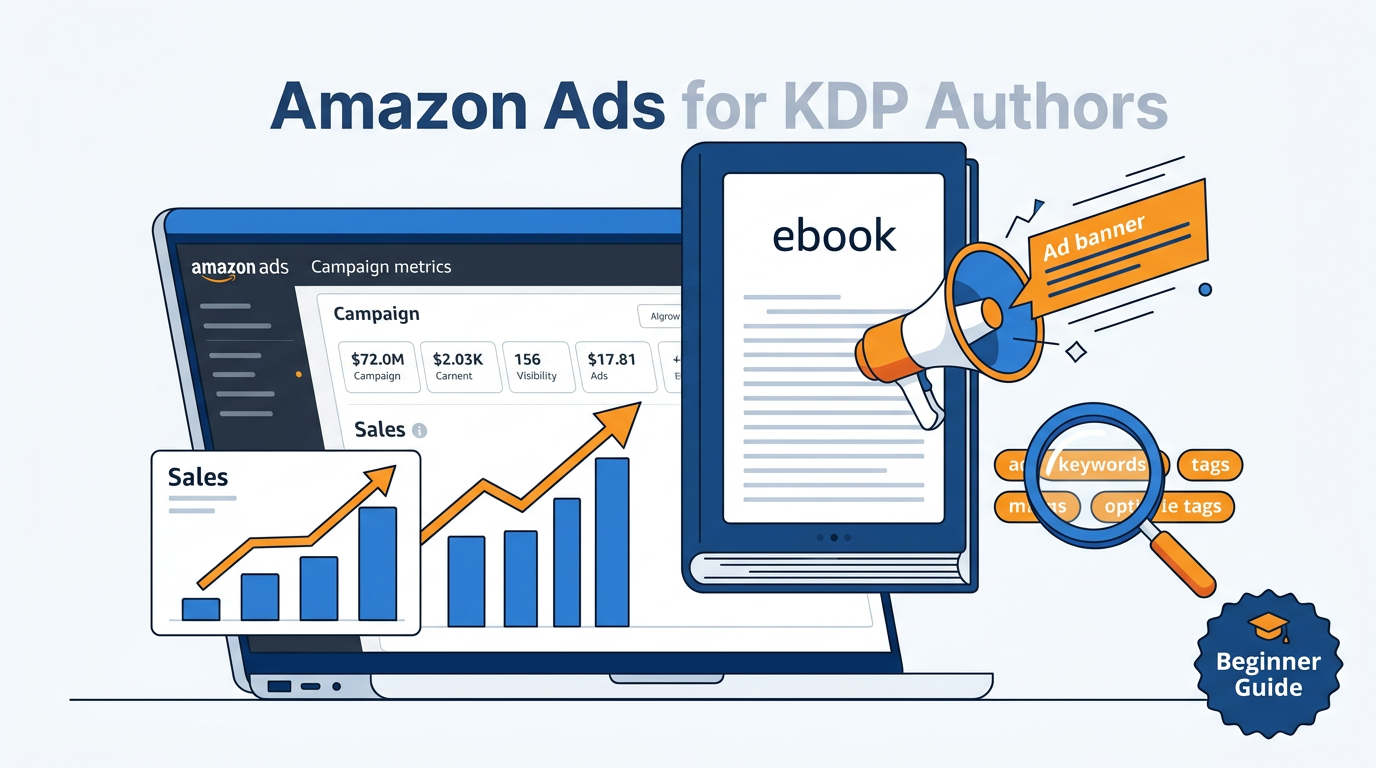
The landscape of self-publishing has shifted dramatically over the last decade. Years ago, a KDP (Kindle Direct Publishing) author could upload a decent book, choose a few relevant categories, and watch the organic sales roll in. Today, Amazon is a "pay-to-play" ecosystem. With over 30 million titles available on the Kindle Store and thousands more added daily, organic visibility is no longer a guarantee—it is a hard-earned reward. For the modern author-entrepreneur, Amazon Advertising (formerly known as AMS) is the most powerful lever available to move the needle from obscurity to the bestseller lists.
However, many authors approach Amazon Ads with trepidation. They fear "bleeding money" or get overwhelmed by the complex dashboard of metrics like ACoS, CPC, and CTR. This guide is designed to strip away the mystery. We will transition from the basic "set and forget" mentality to a professional, data-driven strategy that treats your book as a business asset. Whether you are a debut novelist or a seasoned non-fiction writer, understanding the mechanics of Amazon Ads is essential for long-term sustainability in the publishing world.
The Philosophy of Amazon Ads: Why PPC Matters
Amazon Advertising operates on a Pay-Per-Click (PPC) model. This means you only pay when a potential reader actually clicks on your ad. Unlike traditional billboard or magazine advertising, where you pay for "impressions" (views) without knowing if they led to engagement, PPC allows for granular tracking of every cent spent. For KDP authors, this provides three distinct advantages: visibility, data, and algorithmic "juice."
When you run ads, you aren't just buying sales; you are buying data. You learn which keywords readers use to find books like yours and which covers convert the best. Furthermore, Amazon’s A9 algorithm rewards sales velocity. When your ads drive sales, your organic ranking improves, creating a "halo effect" where paid traffic eventually fuels organic growth. Before diving into the technical setup, use the Royalty Calculator to understand exactly how much profit you have to play with after Amazon takes its 30% or 65% cut. Knowing your "break-even" point is the first step to successful advertising.
Phase 1: Ensuring Retail Readiness Before You Spend a Dime
The biggest mistake KDP authors make is throwing money at a book that isn't ready to sell. Amazon Ads can drive traffic to your book page, but they cannot force a reader to click "Buy Now." If your conversion rate is low, you will lose money regardless of how good your ads are. This concept is known as "Retail Readiness."
Before launching a campaign, evaluate your book's sales page against these four pillars:
- The Cover: Your cover must communicate your genre instantly. If you are writing a psychological thriller, it shouldn't look like a cozy mystery. Use the Cover Calculator to ensure your dimensions and spine are professional, especially if you are running ads for print editions.
- The Blurb: Your book description is your sales pitch. It needs to be professionally formatted to avoid looking like a wall of text. Use a HTML Description Formatter to add bold headings and bullet points that grab the reader's attention.
- Reviews: While you can start ads with zero reviews, social proof is a massive conversion driver. Aim for at least 5–10 honest reviews to provide "social permission" for new readers to take a chance on you.
- Pricing: If your book is priced significantly higher than the genre average, your ad conversion will suffer. Research your competitors and price competitively.
Phase 2: Understanding the Three Main Ad Types
Amazon offers several ways to promote your book, each serving a different purpose in the "customer journey."
1. Sponsored Products
These are the workhorses of the KDP world. Sponsored Products appear in search results and on the product detail pages of similar books (under the "Products related to this item" section). They are keyword-targeted or product-targeted. For beginners, this is where 90% of your budget should go. They look almost identical to organic listings, which builds trust with the reader.
2. Sponsored Brands
Available to authors who have enrolled in the Amazon Brand Registry (usually requiring a trademark), these ads appear at the very top of search results in a large banner format. They allow you to showcase multiple books at once and include your author logo. These are excellent for building "Author Brand" awareness once you have a deep backlist.
3. Sponsored Display
These ads reach readers both on and off Amazon. They often appear on the right-hand side of product pages, under the "Buy Box," or even on third-party websites. These are "interest-based" and "re-marketing" tools. If someone viewed your book but didn't buy it, Sponsored Display can "follow" them around the web to remind them of your title.
Phase 3: The Keyword Strategy – Broad, Phrase, and Exact
Keyword selection is the heart of Amazon Ads. If you target "books," you will spend thousands of dollars for almost no sales because the term is too broad. If you target "hard sci-fi space opera with alien contact," you might get zero impressions because the term is too narrow. The goal is to find the "Goldilocks zone."
When setting up manual campaigns, you must choose a match type for your keywords:
- Broad Match: This gives Amazon the most freedom. If your keyword is "Detective Novel," your ad might show for "Crime Fiction" or "Mystery Books." It's great for discovery but can lead to irrelevant clicks.
- Phrase Match: Your ad shows when the user’s search includes your exact phrase or a very close variation. If your keyword is "Detective Novel," it might show for "Best Detective Novel 2024."
- Exact Match: Your ad only shows if the user types that exact phrase. This usually has the highest conversion rate but the lowest volume of traffic.
Pro Tip: Use the Keyword Combiner to generate a massive list of long-tail keywords. Combining your genre with specific tropes (e.g., "Enemies to Lovers Romance") creates highly targeted traffic that converts at a much higher rate than generic terms.
Phase 4: Automatic vs. Manual Campaigns
Every KDP author should start with an Automatic Campaign. In an "Auto" campaign, Amazon’s algorithm does the heavy lifting. It looks at your book's metadata and shows your ad to people it thinks are interested. Run an Auto campaign for 2–4 weeks with a modest budget ($5/day).
The real value of the Auto campaign is the Search Term Report. After two weeks, download this report. It will show you exactly what words people typed before clicking your ad. You will likely find keywords you never thought of. Take those "winning" keywords and move them into a Manual Campaign where you have more control over the bidding.
This cycle of "Auto for discovery" and "Manual for scaling" is the secret sauce of professional Amazon advertisers. It allows the algorithm to find new audiences while you maintain strict control over your most profitable keywords.
Phase 5: Deciphering the Metrics (ACoS, RoAS, and CTR)
To succeed with Amazon Ads, you must become a student of the numbers. The Amazon dashboard provides several key metrics, but three stand above the rest:
ACoS (Advertising Cost of Sales)
ACoS is calculated as (Ad Spend / Ad Revenue) * 100. For example, if you spend $10 to make $20 in sales, your ACoS is 50%. Many authors panic when they see a high ACoS, but context is everything. If you are launching a new book, a 100% ACoS might be acceptable because you are "buying" visibility and reviews. If you are selling a book series, a 100% ACoS on Book 1 might be profitable if those readers go on to buy Books 2, 3, and 4 for free (organic "read-through").
CTR (Click-Through Rate)
CTR is the percentage of people who saw your ad and clicked on it. A "healthy" CTR for KDP authors is usually between 0.2% and 0.5%. If your CTR is lower than 0.1%, your ad is likely irrelevant to the audience or your cover isn't appealing. If your CTR is high but your sales are low, your cover is doing its job, but your blurb or pricing is failing to close the deal.
CPC (Cost Per Click)
This is the average amount you pay for a click. This varies by genre. Romance and Thriller categories are highly competitive, often requiring bids of $0.50 to $1.00. Niche non-fiction might only require $0.20. Always start with lower bids ($0.25 - $0.35) and slowly increase them if you aren't getting impressions.
Common Mistakes That Drain Your Budget
Even experienced authors fall into traps that can lead to wasted ad spend. Avoid these common pitfalls:
"I set a $50 daily budget and forgot about it."
Never set-and-forget. Amazon will eventually find ways to spend your money on irrelevant terms. Check your campaigns at least twice a week.
- Neglecting "Negative Keywords": This is the most important optimization step. If you write a "serious" history book and your ad is showing for "funny history books," you are wasting money. Add the word "funny" to your Negative Keyword list to stop your ad from appearing for that term.
- Bidding too high too fast: Amazon's "suggested bid" is often much higher than necessary to win the auction. Start low and "creep up" until you start seeing traffic.
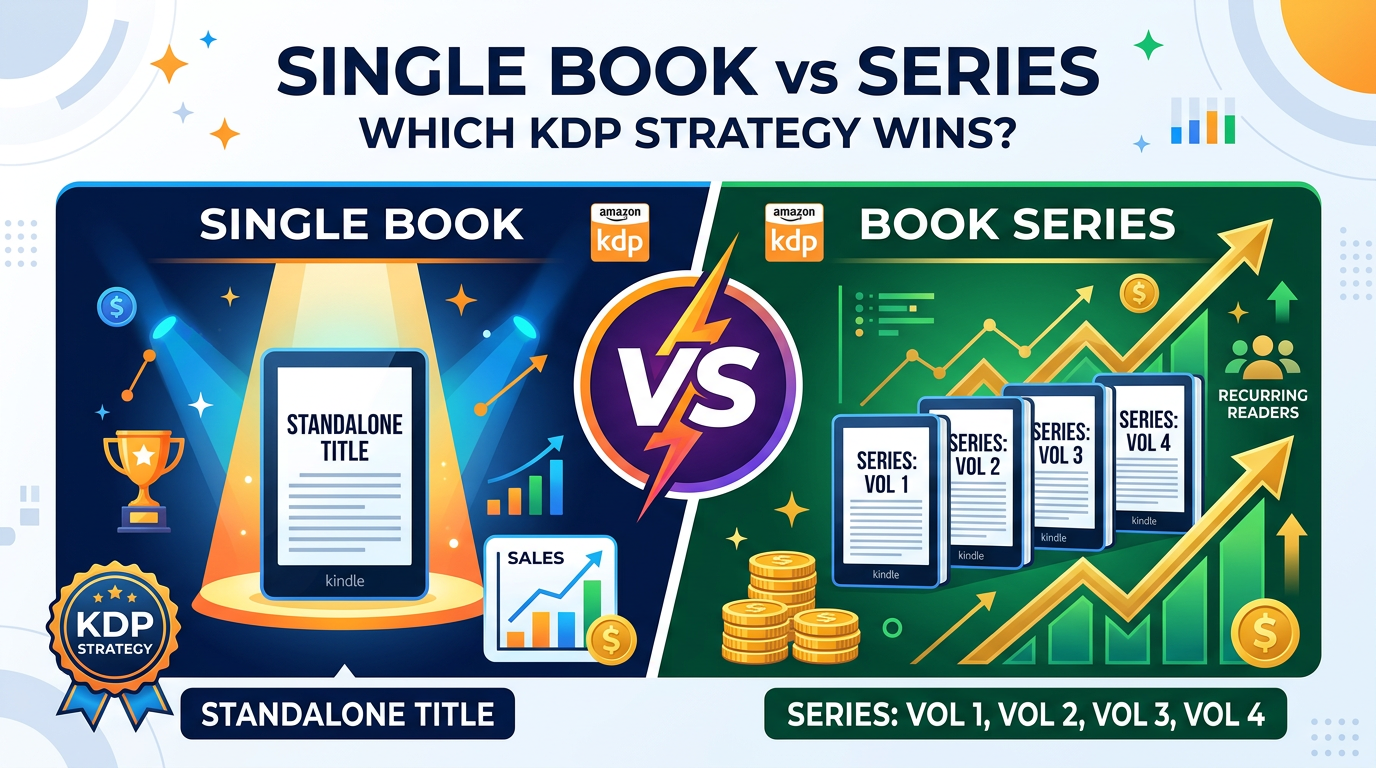
- Advertising a single book without a series: It is very difficult to be profitable on a single $2.99 or $3.99 ebook via ads alone. The real profit in KDP comes from "read-through." Focus your ad spend on the first book in a series to maximize the Return on Investment (ROI) across the entire series.
- Ignoring "Category Targeting": Instead of just keywords, you can target specific categories or even specific ASINs (individual books). This is often cheaper and more effective than broad keyword targeting.
Expert Insights: Advanced Strategies for 2024 and Beyond
As the platform matures, sophisticated strategies are required to maintain an edge. Here are several advanced tips from high-earning KDP authors:
The "Relevance Score" Mastery
Amazon doesn't just show the ad with the highest bid. They show the ad most likely to result in a sale. If your book has a high conversion rate, Amazon will actually lower your CPC because they want to show your book. Focusing on your sales page quality (Retail Readiness) is actually the best way to lower your advertising costs.
Dynamic Bidding: Up and Down vs. Down Only
When setting up a campaign, Amazon asks about your bidding strategy. "Down Only" means Amazon will lower your bid if a sale is unlikely. "Up and Down" means they can increase your bid by up to 100% if a sale is likely. For beginners, always start with "Down Only." It protects your budget while you collect data. Only switch to "Up and Down" for your most profitable, high-converting keywords.
Product Targeting (Stealing Competitor Traffic)
Instead of bidding on the keyword "Stephen King," bid on the ASIN of his latest book. Your ad will appear directly on his product page. This is incredibly effective if your book has a similar cover or theme. If a reader is looking at a bestseller but thinks the price is too high, and your $3.99 book is right there in the "Sponsored" section, you have a high chance of "stealing" that sale.
The Power of "Read-Through" Math
A "loss-leader" strategy is common among professional authors. If you know that for every 10 people who buy Book 1, 5 will buy Book 2 and 3 will buy Book 3, you can calculate the "Total Value" of a Book 1 sale. If Book 1 earns you $2 but the total series value is $7, you can afford to spend $3 in ads to get that first sale. This is why multi-book authors always win at Amazon Ads—they can afford to outbid everyone else.
A Step-by-Step Launch Plan for Your First Ad
- Week 1: Launch one "Automatic" campaign with a $5 daily bid and "Down Only" bidding. Ensure your metadata is clean and use the HTML Description Formatter for your blurb.
- Week 2: Review your Search Term Report. Identify at least 10 keywords that resulted in sales or high clicks.
- Week 3: Create a "Manual" campaign. Add those 10 keywords as "Exact Match" and "Phrase Match." Use the Keyword Combiner to find 50 more related terms to test.
- Week 4: Check your ACoS. If a keyword has spent more than your royalty amount without a sale, "Pause" it. If a keyword is making sales at a low ACoS, increase the bid by $0.05 to get more traffic.
- Ongoing: Every month, add new negative keywords to prune away wasted spend.
Conclusion: The Path to KDP Success
Amazon Advertising is not a "get rich quick" button. It is a sophisticated marketing tool that requires patience, testing, and a willingness to learn from data. Many authors give up after a week because they didn't see an immediate ROI, but the authors who succeed are those who treat their first $100 of ad spend as "tuition." They are paying to learn what the market wants.
By ensuring your book is retail-ready, utilizing tools like the Cover Calculator and Royalty Calculator, and systematically moving from automatic to manual campaigns, you can build a sustainable sales engine. Remember, the goal of Amazon Ads isn't just to sell a book today—it's to signal to the Amazon algorithm that your book is a winner, triggering the organic visibility that leads to long-term author success. Start small, track everything, and keep writing the next book while your ads handle the selling.

Be the first to leave a comment!