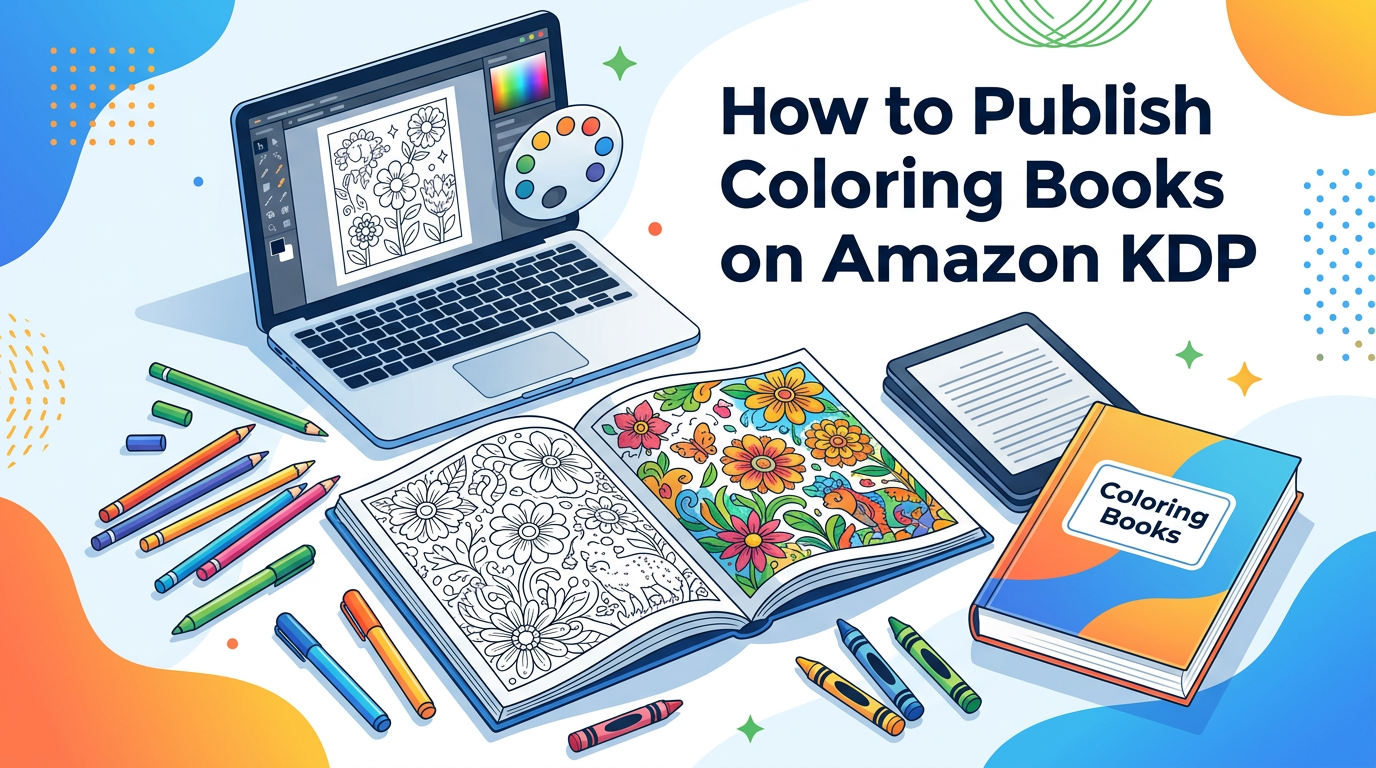
The world of self-publishing has evolved dramatically over the last decade, and Amazon Kindle Direct Publishing (KDP) stands at the forefront of this revolution. Among the most lucrative and creative niches within the platform is the "low-content" and "medium-content" sector—specifically coloring books. Once considered a niche for children, the adult coloring book market exploded years ago and has since stabilized into a consistent, multi-million dollar industry. However, as the market matures, the barrier to entry for success has moved beyond simply "uploading a few drawings." To succeed today, you need a blend of artistic quality, technical precision, and strategic marketing.
This comprehensive guide is designed to take you from a conceptual idea to a high-ranking product on the Amazon storefront. We will delve deep into niche research, interior design technicalities, metadata optimization, and long-term brand building. Whether you are an independent illustrator or an entrepreneur looking to build a publishing empire, this roadmap will provide the expert insights necessary to navigate the complexities of Amazon KDP.
Phase 1: Market Research and Niche Selection
The most common mistake new publishers make is creating a "general" coloring book. A book titled "Coloring Book for Adults" will likely vanish into the millions of existing listings. To gain traction, you must find a "sub-niche" where there is high demand but manageable competition. This is the cornerstone of the Google E-E-A-T (Experience, Expertise, Authoritativeness, and Trustworthiness) approach—demonstrating that you understand your specific audience's needs.
Finding Your "Micro-Niche"
Instead of broad categories, look for intersections of interests. For example:
- Demographic + Theme: "Mindfulness Coloring for Busy Nurses" or "Sarcastic Swear Word Coloring for Tired Moms."
- Activity + Skill Level: "Easy Large Print Coloring for Seniors" or "Intricate Mandalas for Advanced Artists."
- Educational Themes: "Anatomy Coloring Book for Medical Students" or "Alphabet Animals for Toddlers."
Use Amazon’s own search bar to see what "Autosuggest" recommends. This reveals exactly what customers are typing. Analyze the Best Sellers Rank (BSR) of the top five books in a niche; a BSR under 50,000 in the Books category generally indicates strong daily sales. If the top books have thousands of reviews, the niche might be too saturated unless you can provide a significantly better product.
Phase 2: Designing Professional-Grade Interiors
The quality of your interior is what prevents negative reviews and high return rates. Unlike a novel, the "content" of a coloring book is the visual experience. If the lines are pixelated, too thin, or too thick, the customer will feel cheated.
Technical Specifications for Print-on-Demand
Amazon KDP uses specific printing technology, and you must design your files to accommodate their hardware. The standard for coloring books is usually 8.5 x 11 inches, though 8.25 x 8.25 inches is popular for square designs. Here are the non-negotiables:
- Resolution: All images must be 300 DPI (dots per inch). Anything less will result in blurry, unprofessional lines.
- Bleed vs. No Bleed: If your images go all the way to the edge of the page, you must select "Bleed" in KDP and add an extra 0.125 inches to your page dimensions. For most coloring books, "No Bleed" with a 0.5-inch margin is safer to ensure no part of the drawing is cut off during the binding process.
- Single-Sided Pages: This is an industry standard for quality coloring books. Because KDP's paper is relatively thin (60lb weight), ink from markers or heavy gel pens can bleed through. Always include a blank page (or a light "distress" pattern) behind every coloring page to protect the next design.
The Rise of AI in Coloring Books
With the advent of AI tools like Midjourney, creating coloring pages has become faster. However, Amazon has recently updated its guidelines regarding AI-generated content. You must disclose whether your content is AI-generated. More importantly, from a quality perspective, AI often produces "messy" lines or anatomical errors. To meet high-quality standards, always take your AI base images into a vector program like Adobe Illustrator or Affinity Designer to clean up the lines and ensure a consistent aesthetic throughout the book.
Phase 3: Crafting a High-Converting Cover
In the world of Amazon, people absolutely judge a book by its cover. Your cover is your primary marketing tool. It needs to look professional, vibrant, and relevant to the niche. A common mistake is using a dull or matte-only look that doesn't pop against the white background of the Amazon search results page.
Cover Design Best Practices
Your cover should include a sample of the colored-in art from the interior. This shows the customer the potential of the book. Ensure your title is legible even in thumbnail size. Use contrasting colors—if your background is dark, use light or neon text.
Calculating the spine width is the most technical part of cover design. The spine grows with every page you add. To avoid rejection from the KDP review team, you should use the Cover Calculator. This tool ensures your dimensions are perfect, including the "safe zones" where text should not be placed to avoid being cut during trimming.
"The cover is the handshake between the creator and the customer. If it looks amateur, the customer assumes the interior is amateur as well." — Industry Expert Insight
Phase 4: Optimization and Metadata Strategy
Once your files are ready, the way you describe your book to Amazon’s algorithm (the A9 engine) determines if you will ever be found. Metadata includes your title, subtitle, seven backend keywords, and categories.
The Power of Keywords
Your title should be catchy, but your subtitle should be functional. Avoid "keyword stuffing," which can lead to account suspension. Instead, use natural language. For example: "Ocean Wonders: A Relaxing Coloring Book Featuring Tropical Fish, Coral Reefs, and Underwater Landscapes for Adults."
For the seven backend keyword slots, don't repeat words already in your title. Use the Keyword Combiner to brainstorm long-tail phrases like "stress relief gift for women" or "detailed nature illustrations for seniors." This ensures you capture a wide net of search traffic.
Formatting Your Description
The book description is where you close the sale. A wall of plain text is difficult to read. You should use bullet points to highlight features like:
- Total number of unique designs (no repeats!).
- Single-sided printing to prevent bleed-through.
- Large 8.5 x 11" format.
- High-resolution 300 DPI crisp lines.
To make your description look professional with bolding and lists, use the HTML Description Formatter. Amazon allows basic HTML, and a well-formatted description significantly increases conversion rates.
Phase 5: Understanding Royalties and Pricing
Pricing a coloring book is a balancing act. If you price too high, you lose to competitors; too low, and your profit margins vanish after printing costs. Amazon KDP takes a fixed printing cost out of every sale, which depends on the page count. Generally, for a standard 100-page black and white coloring book, the printing cost is around $2.15.
To calculate exactly how much you will take home per sale, use the Royalty Calculator. Most successful publishers price their books between $6.99 and $9.99. While KDP offers a 60% royalty for expanded distribution, remember that the printing cost is deducted after that percentage is applied. High-volume sellers often focus on a "quantity over high-margin" strategy, especially during the Q4 holiday season.
Phase 6: Common Pitfalls and How to Avoid Them
Success in KDP is as much about what you *don't* do as what you do. Many accounts are banned every year for simple, avoidable mistakes.
1. Trademark and Copyright Infringement
Never create coloring books based on copyrighted characters like Disney, Marvel, or Pokémon. Even using trademarked terms like "Spiderman" in your keywords can lead to a permanent ban. Always check the USPTO TESS database for trademarks before naming your book or brand.
2. Poor Margins and "Gutter" Issues
The "gutter" is the inside margin where the book is bound. If your drawing is too close to the gutter, the user won't be able to color it comfortably. Ensure at least a 0.75-inch margin on the inside edge. If Amazon's automated previewer flags "quality issues," this is usually why.
3. "Thin" Content
Amazon is cracking down on low-quality, repetitive content. If you upload 50 books that are essentially the same with different covers, you risk being flagged for "disrupting the customer experience." Quality is currently outperforming quantity in the current KDP climate.
Phase 7: Marketing and Scaling Your Brand
Once your book is live, the work is only halfway done. In a sea of millions of books, you need a "push" to get the "organic" engine running. This is where the marketing phase begins.
Amazon Advertising (AMS)
Amazon’s internal advertising platform is the most effective way to drive sales. Start with "Automatic" campaigns to let Amazon find which keywords work for you. Once you have data, switch to "Manual" targeting. Aim for an ACOS (Advertising Cost of Sales) that is lower than your royalty percentage to remain profitable.
Building an Ecosystem
The most successful KDP publishers don't just sell books; they build brands. Consider the following:
- A+ Content: Use the KDP "A+ Content" feature to add images of the interior pages to the product detail page. This gives customers a "look inside" that the standard previewer often misses.
- Social Media: Platforms like TikTok (especially #BookTok) and Pinterest are goldmines for coloring books. Time-lapse videos of someone coloring a page from your book can go viral and drive thousands of sales.
- Email Lists: Include a "Free Gift" page at the front of your book (e.g., "Download 5 extra bonus pages") that leads to a landing page where you collect email addresses. This allows you to launch your next book to a warm audience.
Expert Insights: The Future of KDP Coloring Books
As we move further into the 2020s, the "gold rush" phase of KDP is over, replaced by a "professionalism" phase. To maintain an authoritative presence and meet AdSense-level quality standards, publishers must focus on "Customer Lifetime Value." This means creating a series of books that feel cohesive. If a customer buys your "Victorian Fashion" coloring book and loves it, they should immediately see your "1920s Flapper Fashion" book as a suggested purchase.
Furthermore, sustainability is becoming a talking point. While KDP is print-on-demand (which is inherently more sustainable than mass printing), being transparent with your audience about the quality of the recycled paper options or the "made-to-order" nature of the product can build trust.
Conclusion: Your Path to Publishing Success
Publishing a coloring book on Amazon KDP is a journey that combines artistic expression with data-driven entrepreneurship. It is not a "get rich quick" scheme, but a legitimate business model that rewards those who prioritize quality and customer experience. By following the technical guidelines, utilizing tools like the Cover Calculator and Royalty Calculator, and committing to deep niche research, you can build a passive income stream that lasts for years.
Success on KDP is iterative. Your first book might not be a bestseller, but the data you gather from it will pave the way for your tenth book to dominate the charts. Stay consistent, keep an eye on industry trends, and always design with the end-user’s relaxation and joy in mind. The world always needs more art—why shouldn't it be yours?
Be the first to leave a comment!