The landscape of self-publishing has undergone a seismic shift over the last decade. What was once a niche hobby for aspiring novelists has transformed into a sophisticated global business model. Amazon Kindle Direct Publishing (KDP) stands at the epicenter of this revolution, controlling a massive share of the global eBook and print-on-demand market. However, the "passive income" dream often sold by influencers—the idea that you can upload a generic manuscript and watch the money roll in—is a relic of the past. Today, building a sustainable income stream through Amazon KDP requires a blend of data-driven niche research, high-quality production, and strategic marketing.
To truly achieve passive income, one must understand that the "passive" part only begins after a significant "active" phase of creation and optimization. In this comprehensive guide, we will move beyond surface-level advice and dive into the mechanics of building a publishing empire. Whether you are a first-time author or an experienced publisher looking to scale, these five strategies will provide the roadmap for navigating the competitive Amazon ecosystem while maintaining high standards that satisfy both readers and Google's E-E-A-T (Experience, Expertise, Authoritativeness, and Trustworthiness) guidelines.
Understanding the KDP Ecosystem: More Than Just eBooks
Before diving into specific strategies, it is essential to understand the technical and economic framework of Amazon KDP. At its core, KDP is a fulfillment service. You provide the content and metadata; Amazon provides the storefront, the digital delivery, and the physical printing infrastructure. The beauty of this model lies in its scalability. Unlike traditional publishing, where a physical print run might sit in a warehouse, KDP’s print-on-demand (POD) model ensures that a book is only printed when a customer buys it, eliminating inventory risk.
The financial incentives are equally compelling. Amazon offers a 70% royalty on eBooks priced between $2.99 and $9.99, and a 35% royalty outside that range. For print books, you receive 60% of the list price minus the printing costs. To accurately project your earnings and set competitive prices, savvy publishers utilize a Royalty Calculator to find the "sweet spot" where profit margins meet consumer demand. Understanding these numbers upfront is the difference between a profitable business and an expensive hobby.
Strategy 1: The High-Content Niche Authority Model
The most resilient passive income strategy on KDP is the creation of high-content, non-fiction authority books. These are books that solve a specific problem, teach a skill, or provide deep insight into a hobby or industry. Unlike fiction, which often relies on a constant stream of new releases to maintain momentum, a well-written non-fiction book can become a "perennial seller."
Finding Your Profitable Niche
Success starts with research. You are not looking for the most popular topic, but rather the intersection of high demand and manageable competition. Tools like the Keyword Combiner are invaluable here. By blending primary keywords (e.g., "Gardening") with modifiers (e.g., "for urban beginners," "on a budget," "using hydroponics"), you can discover long-tail keywords that have enough search volume to sustain sales but aren't dominated by major publishing houses.
Building Authority through Quality
Amazon's algorithm is increasingly sophisticated. It prioritizes books with high conversion rates and low return rates. To build authority:
- Expert Interviews: Even if you aren't a world-class expert, you can curate expertise. Interviewing specialists and including their insights adds immediate credibility.
- Data and Citations: Back up your claims with recent statistics or scientific studies. This satisfies Google’s E-E-A-T standards and builds trust with the reader.
- Professional Formatting: A poorly formatted book is the quickest way to a 1-star review. Use an HTML Description Formatter to ensure your Amazon sales page looks professional and readable.
Strategy 2: The Multi-Format Expansion (Audio and Print)
Many publishers make the mistake of stopping at the eBook. However, reader preferences are diverse. By expanding into print and audio, you are essentially multiplying your "real estate" on the Amazon search results page without having to write a new book.
The Power of Print-on-Demand (POD)
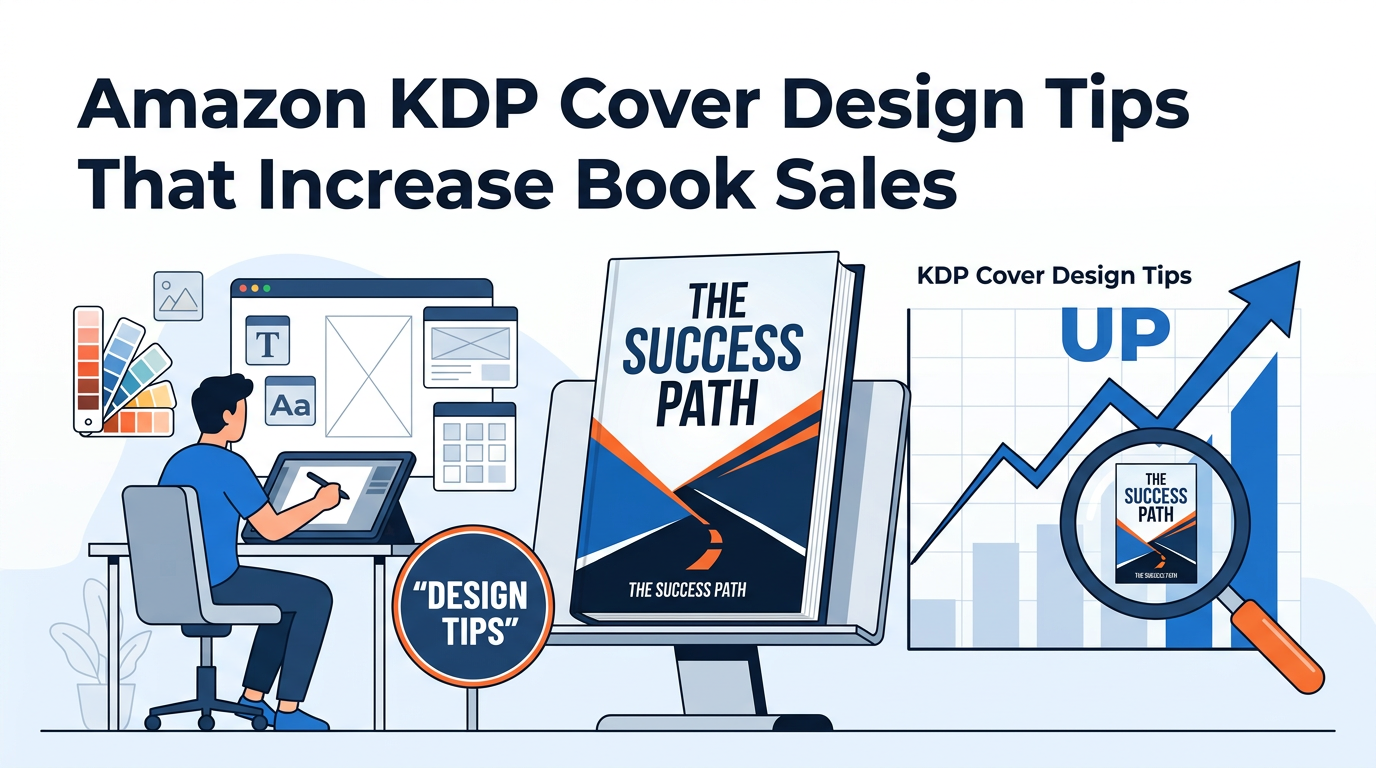
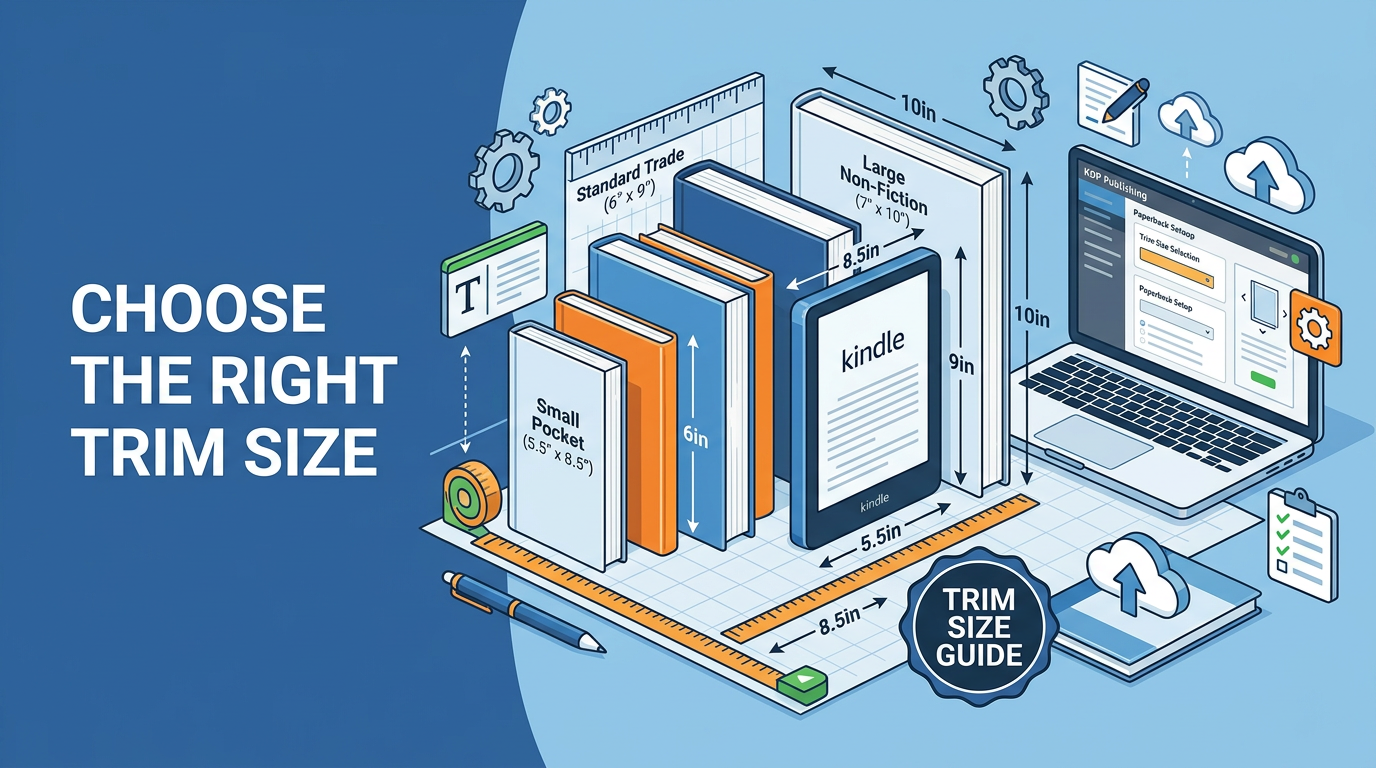
Paperbacks and hardcovers offer a tangible quality that many readers still prefer, especially for non-fiction or giftable content. When moving to print, the cover design requirements change significantly. You must account for the spine width and "bleed" areas. A Cover Calculator is essential for generating precise dimensions based on your page count and paper type. A professional cover is the single most important factor in a reader's decision to click "Buy Now."
Audiobooks and the ACX Advantage
The audiobook market is the fastest-growing segment in publishing. Through Amazon’s ACX (Audiobook Creation Exchange), you can narrate the book yourself, hire a professional narrator for an upfront fee, or enter a royalty-share agreement. Recently, Amazon has also introduced AI-narrated "Virtual Voice" options for certain titles, making audiobooks more accessible than ever. Audiobooks provide a truly passive stream because they tap into a different audience—commuters and multitaskers—who may never have found your eBook.
Strategy 3: Serialized Fiction and the "Lead Magnet" Effect
In the world of fiction, the most successful publishers use the "Series Model." Passive income in fiction comes from "sell-through"—the process where a reader buys book one and then proceeds to buy books two through ten.
The Permafree Strategy
A common strategy is to make the first book in a series free or very low-priced ($0.99). This acts as a lead magnet. By capturing the reader's interest early, you build a loyal fanbase that will pay full price for subsequent installments. This strategy relies heavily on "category cannibalization," where you dominate specific sub-genres to ensure your series is always visible in the "Customers who bought this also bought..." section.
Consistency and Branding
For a series to work, the branding must be consistent across all volumes. This means similar cover typography, color palettes, and character arcs. Readers of series have specific expectations; if you are writing a "Cozy Mystery," your covers should not look like "Psychological Thrillers." Using a Keyword Combiner to identify specific sub-genres like "Clean & Wholesome Romance" or "Hard Science Fiction" allows you to target the exact readers who are looking for their next series binge.
Strategy 4: Dominating the Low-Content and Mid-Content Market
Low-content books—such as journals, planners, and coloring books—became a gold rush a few years ago. While the market is now more crowded, the potential for passive income remains for those who focus on "Mid-Content" and high-quality design.
Moving Beyond the Generic Journal
A blank lined journal is no longer a viable business model. To succeed today, you must add value. This is where "Mid-Content" comes in. Instead of a blank notebook, create a "90-Day Guided Fitness Journal for Post-Partum Moms" or a "Project Management Tracker for Freelance Graphic Designers." These niche-specific interiors require more work upfront but face significantly less competition.
Technical Precision for POD
Low-content books are heavily reliant on the physical product's quality. If the margins are off or the cover is blurry, customers will return the product, hurting your account health. Always use a Cover Calculator to ensure your design fits perfectly on the physical template. Additionally, use the HTML Description Formatter to highlight the specific features of your interior (e.g., "120 pages of 70lb cream paper") to manage customer expectations.
Strategy 5: The "Globalized Content" and Translation Strategy
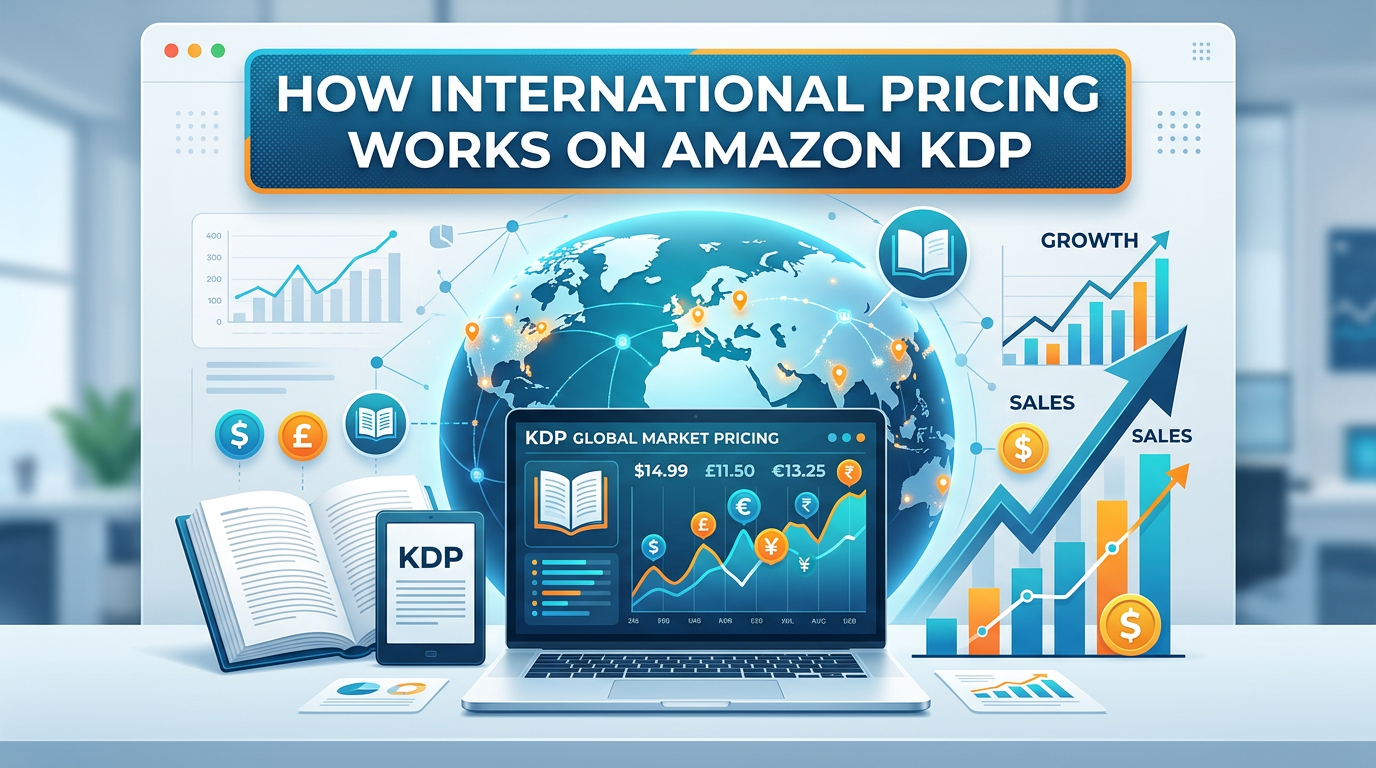
Most KDP publishers focus solely on the US market (.com). However, Amazon has a massive presence in the UK, Germany, Japan, France, Italy, Spain, and beyond. Translating your best-selling titles into other languages is one of the most overlooked ways to generate passive income from existing assets.
Why Germany and Japan are Gold Mines
The German and Japanese markets have high purchasing power and a strong reading culture, yet they have far fewer titles available than the English storefront. You don't need to be a linguist to succeed here. You can hire professional translators on platforms like Reedsy or Upwork. Once the translation is done, you simply upload it as a new book. You now have two or three books earning money for the price of one original manuscript.
Localizing Metadata
Translation isn't just about the manuscript; it’s about the metadata. You must research keywords in the local language. A keyword that works in English might not be what a Spanish reader types into the search bar. Using tools like the Keyword Combiner with translated terms helps you capture local search intent effectively.
Technical Optimization: The Key to Long-Term Discoverability
Passive income on KDP is entirely dependent on the Amazon Search Engine. If readers can't find your book, they can't buy it. SEO for KDP involves three main pillars: the Title/Subtitle, the 7 Backend Keywords, and the Book Description.
"The best book in the world won't sell a single copy if it's buried on page 20 of the search results." - Industry Expert Insight
Your subtitle should be descriptive and contain your primary long-tail keywords. However, avoid "keyword stuffing," which Amazon's A9 algorithm now penalizes. For the description, use the HTML Description Formatter to include bold headers and bullet points. A structured description not only improves conversion rates but also helps with Google's indexing, potentially bringing in organic traffic from outside of Amazon.
Common Mistakes That Kill Passive Income
In our analysis of failed KDP accounts, several recurring patterns emerge. Avoiding these "income killers" is crucial for long-term sustainability:
- Ignoring the "Look Inside" Feature: Readers use the sample to judge your writing and formatting. If your first chapter is full of typos or the formatting is messy, you will lose the sale instantly.
- Poor Cover Design: A DIY cover usually looks like a DIY cover. In a marketplace of millions, you need a professional-grade visual to build trust.
- Violating Amazon's Terms of Service (ToS): Using copyrighted images, misleading titles, or incentivizing reviews are the fastest ways to get your account banned. Once your account is closed, your passive income disappears forever.
- Pricing Too High or Too Low: Pricing is a psychological lever. Use a Royalty Calculator to see how your price affects your rank and profit. Sometimes a lower price leads to a higher volume of sales, which improves your Best Seller Rank (BSR) and leads to more organic visibility.
Expert Insights: The Future of KDP in the AI Era
The rise of Generative AI has flooded KDP with low-quality content. This is actually an opportunity for serious publishers. As the marketplace becomes cluttered with mediocre AI books, Amazon is tightening its quality controls. Publishers who focus on human-centric value, original research, and high-quality formatting will rise to the top. The "human touch" is now a competitive advantage.
Furthermore, Amazon Advertising (AMS) is becoming a "pay-to-play" necessity for new books. While this might seem to contradict the "passive" nature of the business, a well-optimized ad campaign can eventually be automated. By finding profitable keywords and setting a fixed daily budget, you can ensure a steady stream of traffic that keeps your book's BSR healthy, which in turn fuels organic sales.
Conclusion: Your Action Plan for KDP Success
Building a passive income stream through Amazon KDP is a marathon, not a sprint. The most successful publishers are those who treat their titles as long-term assets rather than one-off experiments. By focusing on high-content authority, expanding into multiple formats, mastering series dynamics, and leveraging global markets, you create a diversified portfolio of digital real estate.
To get started today, follow these actionable steps:
- Identify three potential niches using the Keyword Combiner to ensure there is viable demand.
- Draft a high-quality manuscript that offers more depth and better information than the currently top-ranked books in those niches.
- Use the Cover Calculator to brief a professional designer on your paperback requirements.
- Optimize your sales page with the HTML Description Formatter to maximize your conversion rate.
- Calculate your break-even points and royalty expectations with the Royalty Calculator before launching your first ad campaign.
The tools and strategies are at your fingertips. With discipline and a commitment to quality, Amazon KDP can transition from a side hustle into a powerful engine for financial independence.
Be the first to leave a comment!