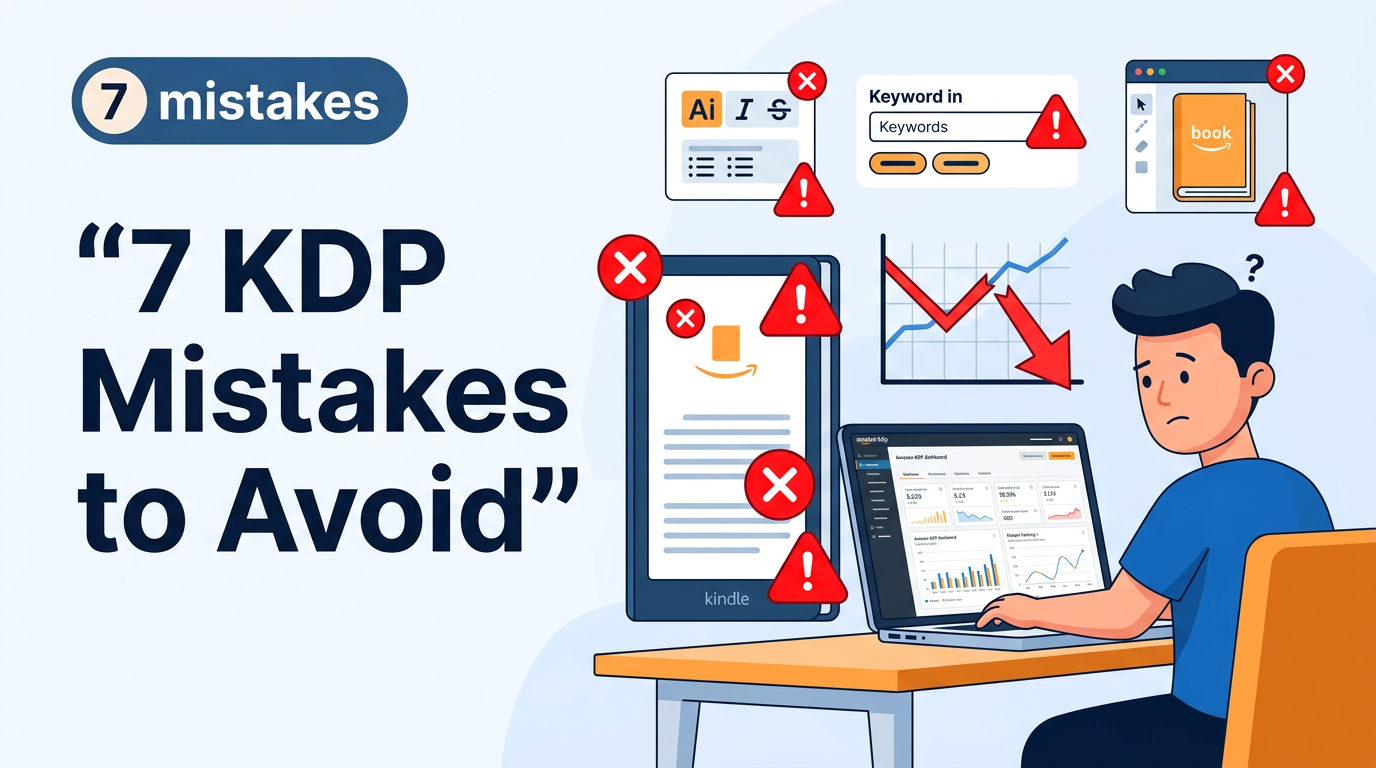
Amazon Kindle Direct Publishing (KDP) has revolutionized the literary world, democratizing the path to becoming a published author. What was once guarded by "Big Five" gatekeepers is now accessible to anyone with a manuscript and an internet connection. However, this ease of entry is a double-edged sword. While anyone can publish, not everyone should publish without first understanding the intricate mechanics of the platform.
Data from industry reports suggests that over 1.4 million books are self-published through KDP every single year. In such a saturated marketplace, the margin for error is razor-thin. A single mistake in your metadata, a poorly formatted interior, or a cover that fails the "thumbnail test" can result in your book sinking into the depths of Amazon’s algorithm, never to be seen by a paying customer. Many beginners treat KDP as a "set it and forget it" passive income stream, but the reality is that successful self-publishing is a sophisticated business requiring technical precision and strategic marketing.
In this comprehensive guide, we will move beyond the basics. We will dissect the seven most critical mistakes that sabotage KDP authors and provide the high-level strategies used by "six-figure indies" to dominate the charts. Whether you are publishing your first novella or a low-content planner, avoiding these pitfalls is the difference between earning pennies and building a sustainable publishing empire.
1. The Professionalism Gap: Amateur Book Formatting
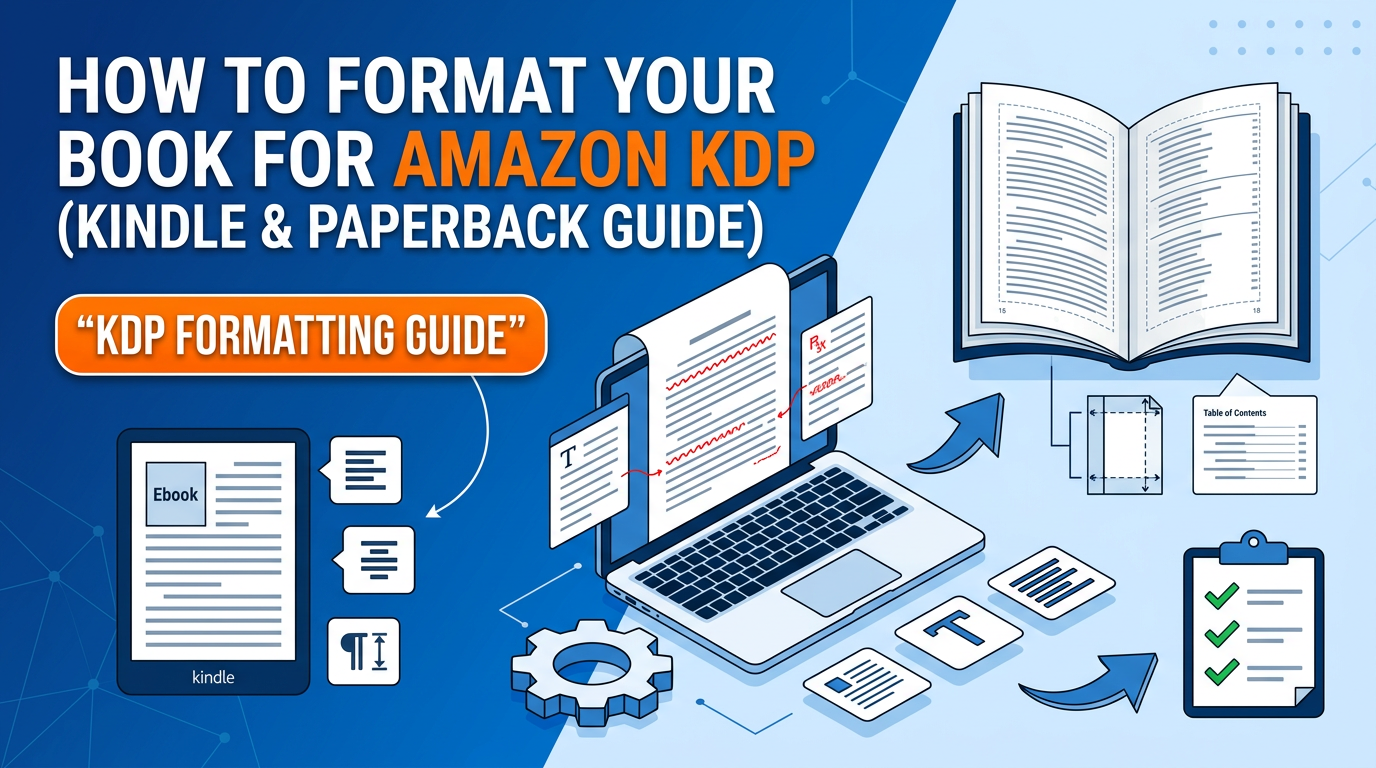
One of the most immediate ways a reader identifies an amateur author is through poor formatting. On Kindle devices, readers have the power to change font sizes and styles, which means your book must be "reflowable." If you upload a fixed-layout document where a reflowable one is expected, your readers will experience overlapping text, broken images, and an unreadable mess.
For print-on-demand (POD) paperbacks, the stakes are even higher. Beginners often forget the "gutter"—the inner margin that accounts for the book's binding. Without a proper gutter, your text will disappear into the spine, making the book physically difficult to read. Furthermore, many authors fail to account for "bleed," which is necessary if your images extend to the edge of the page.
Expert Strategy: Mastering the Technicals
- The Look Inside Feature: Remember that Amazon provides a "Look Inside" preview. If the first few pages show inconsistent spacing or weird symbols, you have lost the sale before the reader even sees your prose.
- Trim Sizes: 6x9 is the industry standard for fiction, but smaller sizes like 5x8 are becoming popular for memoirs. Choosing the wrong trim size can make your book look like a pamphlet or an oversized textbook.
- Tools of the Trade: To ensure your physical dimensions are perfect, always use a Cover Calculator. This tool is essential for determining the exact spine width based on your page count and paper type (white vs. cream).
Professional Tip: Never use the "Enter" key to create page breaks. Use the "Insert Page Break" function in your word processor. Excessive "Enters" translate into massive gaps on Kindle devices, which can lead to negative reviews regarding "formatting errors."
2. Metadata Malpractice: Inadequate Keyword and Category Research
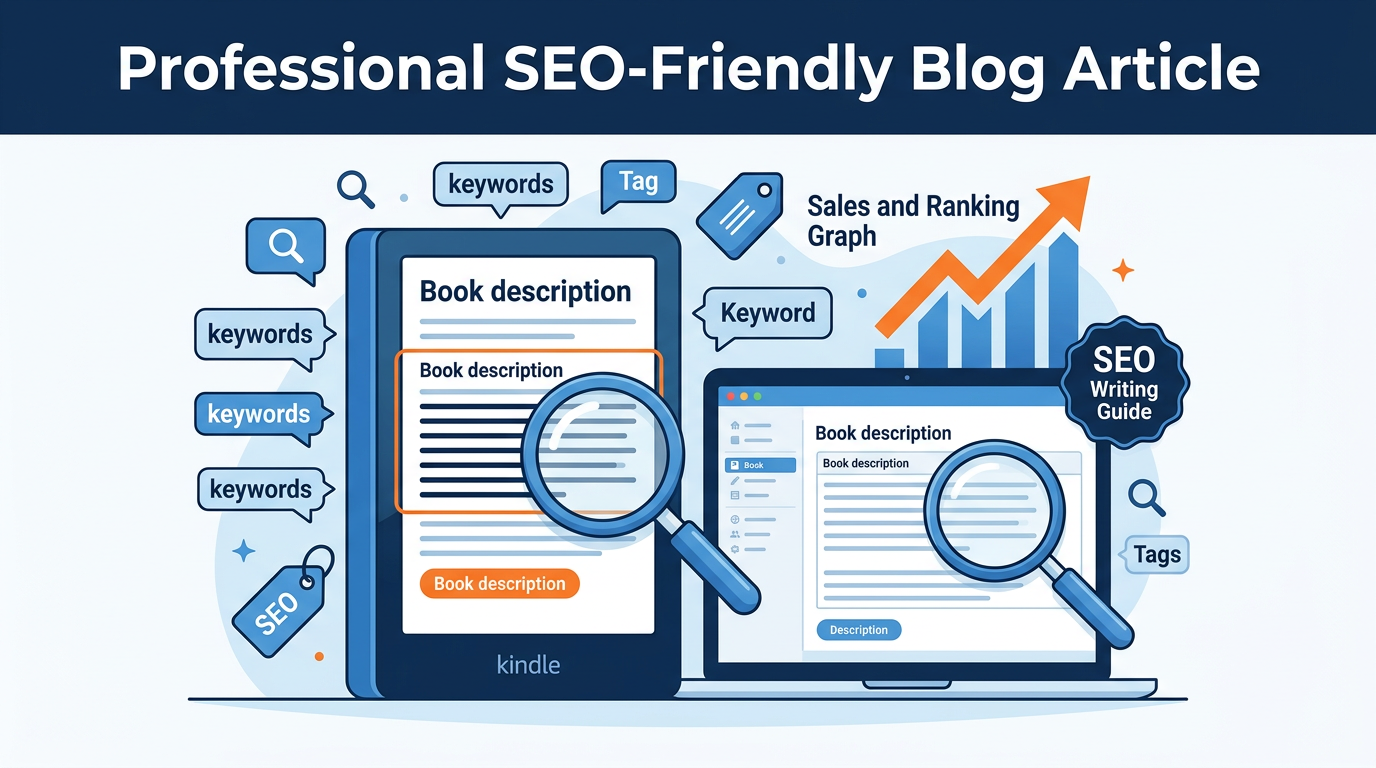
Amazon is not just a bookstore; it is a massive search engine. Like Google, it relies on SEO (Search Engine Optimization) to connect products with buyers. Beginners often treat the "7 Backend Keyword Boxes" as an afterthought, filling them with broad terms like "fiction" or "romance." This is a fatal error.
If you use broad keywords, you are competing with millions of other books. You want to target "Long-Tail Keywords"—specific phrases that shoppers actually type into the search bar. Instead of "Fantasy," use "Epic dragon rider fantasy for adults." This narrows your competition and increases your conversion rate because you are reaching a highly targeted audience.
How to Win the Search Game
To truly master discoverability, you must use data-driven research. Many successful authors use a Keyword Combiner to generate high-intent phrases that combine genres, tropes, and target audiences. This ensures that your book appears in the "also bought" sections of similar titles.
Furthermore, categories on KDP are more complex than they appear. While you can select two categories during setup, you can often contact KDP support to be added to up to ten relevant categories. The goal is to find "niche" categories where you can easily reach the #1 Bestseller rank, which provides the coveted orange badge that significantly boosts social proof and sales.
3. The "DIY" Editing Trap
There is a dangerous myth in the self-publishing community that "good enough is fine for Kindle." It is not. The modern reader is sophisticated and has zero patience for typos, grammatical slips, or plot holes. If your book is riddled with errors, you will receive 1-star reviews that will haunt your listing forever.
Self-editing is impossible. Your brain automatically "fixes" errors as you read because it knows what you meant to write. While AI tools like Grammarly or ProWritingAid are helpful for a first pass, they are not a substitute for a human editor. AI often misses nuance, tone, and deep structural issues.
The Three Tiers of Editing
- Developmental Editing: Focuses on the "big picture"—pacing, character arcs, and logic.
- Copyediting: Focuses on the mechanics—sentence structure, flow, and consistency.
- Proofreading: The final "polish"—checking for spelling, punctuation, and formatting glitches.
If you are on a budget, at the very least, hire a professional proofreader. A single "your" instead of "you're" in the first chapter can destroy your authority as an author. Industry research shows that books with professional editing sell, on average, 40% more copies than those without.
4. Judging a Book by Its Cover: Design Failures
Your book cover has one job: to stop the scroll. On Amazon, your cover will mostly be seen as a tiny thumbnail. If the title is unreadable or the imagery is cluttered, shoppers will move past it in milliseconds.
A common mistake is "Genre Mismatch." Every genre has a visual language. Thrillers often use high-contrast colors and bold, sans-serif fonts. Cozy mysteries use illustrated, whimsical styles. If you publish a dark thriller with a bright, floral cover, you will confuse the algorithm. People who click on it won't buy it, and the algorithm will stop showing it to people because it thinks your book is "unpopular."
Essential Cover Design Principles
- The Thumbnail Test: Shrink your cover design down to 100 pixels wide. Can you still read the title? Is the focal point clear?
- Hierarchy: The title should usually be the largest element, followed by the author's name. Don't let the background art overwhelm the text.
- Technical Precision: For paperbacks, your cover must account for the spine and the "bleed" area. Use a Cover Calculator to get the exact PDF dimensions. Uploading a cover that is even 1/8th of an inch off can result in Amazon rejecting your file or, worse, printing it with white lines on the edges.
5. The "Build It and They Will Come" Fallacy
Many beginners believe that once they hit "Publish," Amazon will do the marketing for them. This is the quickest way to end up with zero sales. Amazon’s algorithm rewards momentum. If your book gets sales and reviews quickly, Amazon will start promoting it to more people. If it sits stagnant, it will be buried.
You need a "Launch Plan." This involves building an "ARC" (Advanced Review Copy) team—a group of readers who receive the book early in exchange for an honest review on launch day. Social proof is the lifeblood of KDP. A book with zero reviews is a massive risk for a buyer; a book with twenty reviews is a "safe" purchase.
Building a Sustainable Marketing Engine
Marketing isn't just about yelling on social media. It's about building an ecosystem:
- Email Lists: This is the only asset you truly own. Include a link at the back of your book inviting readers to join your newsletter in exchange for a free "magnet" (like a deleted scene or a prequel).
- Amazon Ads (AMS): Once your book is converting well, you can use paid ads to target specific authors or keywords. Monitor your ACOS (Average Cost of Sale) carefully to ensure you remain profitable.
- Content Marketing: Write blog posts or create videos related to your book's topic to drive organic traffic.
Expert Insight: Don't wait until the book is finished to start marketing. Start building "hype" three months before launch by sharing cover reveals, character sketches, or "work in progress" snippets.
6. Ignoring the Economics: Pricing and Royalties
Pricing is a psychological tool. Beginners often price their books too high because they value their time, or too low because they lack confidence. Amazon has specific royalty tiers that you must understand to maximize profit.
On KDP, for eBooks priced between $2.99 and $9.99, you receive a 70% royalty. If you price your book at $1.99 or $12.99, your royalty drops to 35%. Forgetting this can cost you thousands of dollars in lost revenue. For paperbacks, you must subtract the printing cost from the retail price before calculating your 60% royalty.
Strategic Pricing Advice
To understand your potential earnings, use a Royalty Calculator. This helps you determine the "sweet spot" where your price is competitive for your genre but still provides a healthy profit margin. Additionally, consider "International Pricing." Don't just let Amazon auto-convert your US price; look at what books cost in the UK, Germany, and Japan, and adjust your prices to end in ".99" in those local currencies for a more professional look.
7. Policy Violations: The "Silent Killer" of KDP Accounts
Amazon is notorious for its strict (and sometimes opaque) Terms of Service. Beginners often inadvertently violate policies that can lead to permanent account termination. This is the most devastating mistake because once you are banned from KDP, you are usually banned for life.
Common Policy Trapdoors
- Copyright and Trademark: Never use trademarked names in your titles or keywords. You cannot title your book "Marketing Strategies for Disney" or use "Harry Potter" as a keyword.
- Misleading Metadata: Do not include "Bestseller" or "Free" in your title or subtitle. This is a direct violation of Amazon's guidelines.
- AI Disclosure: As of late 2023, Amazon requires authors to disclose if their content (text, images, or translations) was AI-generated. Failing to disclose this accurately can lead to your book being removed.
- HTML Issues: Your book description is your sales page. Many authors try to use complex HTML to make it look fancy, but Amazon only allows a specific subset of HTML tags. To ensure your description looks clean and doesn't trigger a formatting error, use an HTML Description Formatter.
The "Advanced Author" Checklist
Before you hit that publish button, run through this final checklist of expert-level considerations:
- The "Mobile" Check: View your cover on a mobile phone screen. Is it striking?
- The "Front Matter" Audit: Does your book have a Title Page, Copyright Page, and Table of Contents? (Kindle readers expect a clickable TOC).
- The "Back Matter" Strategy: Do you have a "Call to Action" at the end? Ask for a review and provide a link to your next book.
- Category Strings: Have you researched the exact "browse paths" where your book belongs?
- Global Distribution: Have you enabled "Expanded Distribution" for your paperbacks to reach libraries and independent bookstores?
Common Mistakes: At a Glance
To summarize, let’s look at the most frequent errors that plague new publishers and how to pivot toward success:
- Mistake: Using a generic, low-resolution image for a cover. Fix: Hire a professional designer or use high-resolution assets that fit genre tropes.
- Mistake: Writing a description that is just a summary. Fix: Use copywriting techniques—start with a "hook," build tension, and end with a call to action. Format it perfectly using the HTML Description Formatter.
- Mistake: Ignoring the data. Fix: Check your KDP dashboard daily. If your "impressions" are high but "clicks" are low, your cover is the problem. If "clicks" are high but "sales" are low, your description or price is the problem.
Conclusion: The Path to KDP Mastery
Amazon KDP is a marathon, not a sprint. The "gold rush" era of slapping together a 30-page eBook and making thousands of dollars is over. Today, the platform belongs to those who treat self-publishing with the respect of a traditional craft and the discipline of a modern business.
Success on KDP is built on a foundation of quality. By avoiding the common pitfalls of poor formatting, lazy metadata, and inadequate editing, you place yourself in the top 5% of authors on the platform. Remember that your book is a product, and the Amazon store is your storefront. Every detail—from the gutter margins you calculated with a Cover Calculator to the keyword phrases you built with a Keyword Combiner—contributes to your brand's authority.
Don't be discouraged by the technicalities. Every expert author was once a confused beginner. The difference is that the experts learned the rules of the game before they tried to win it. Take your time, invest in your education, and prioritize the reader's experience above all else. Your publishing empire starts with one correctly published book. Now, go make it happen.
Be the first to leave a comment!