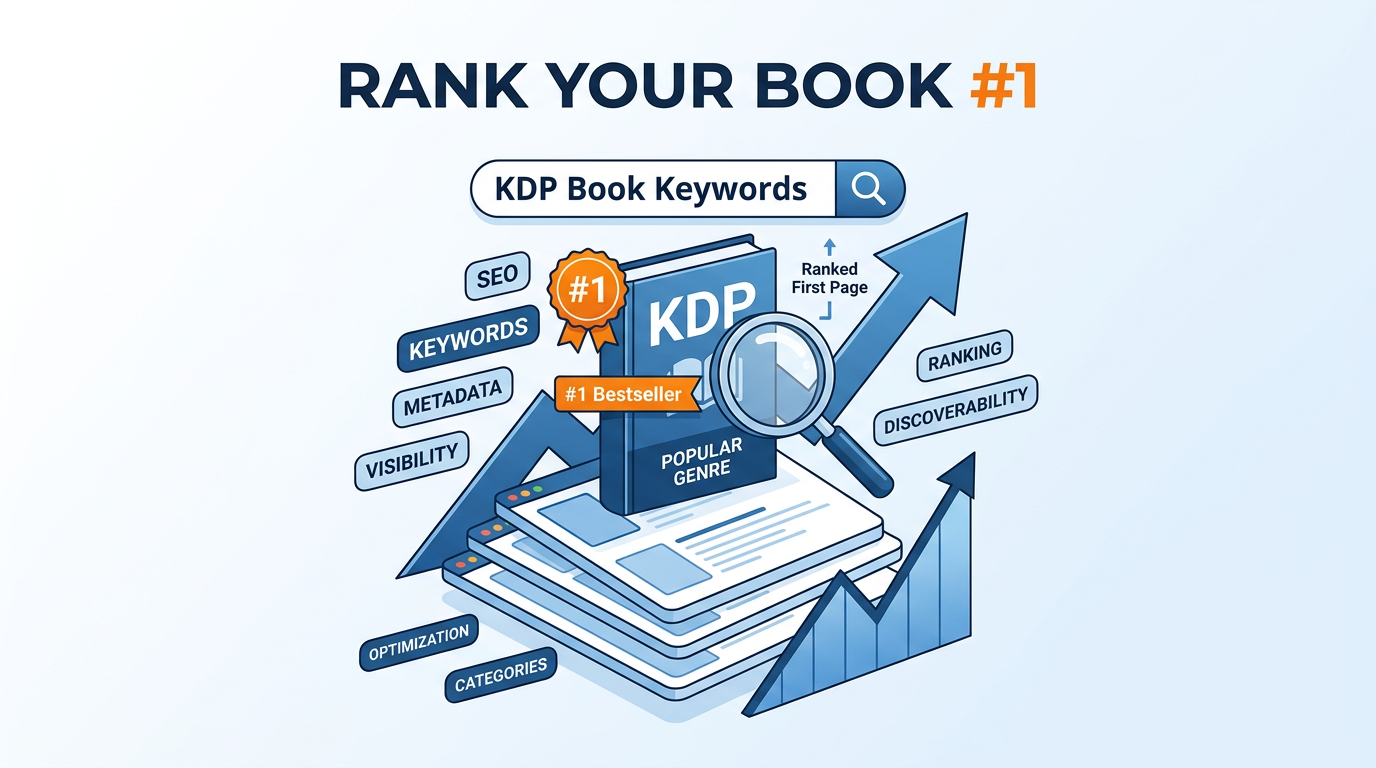
In the hyper-competitive world of self-publishing, writing a masterpiece is only half the battle. With over 30 million titles currently available on the Amazon Kindle Store and thousands of new books uploaded every single day, the "build it and they will come" philosophy is a recipe for obscurity. To succeed as a modern independent author, you must think like a digital marketer. This is where Amazon KDP SEO (Search Engine Optimization) becomes your most powerful tool for visibility and long-term passive income.
Amazon is not just a retailer; it is the world’s largest search engine for commercial intent. When a user types a query into the Amazon search bar, they are often ready to buy. Your goal is to ensure that your book is the first one they see. This guide provides an exhaustive, expert-level deep dive into the Amazon A10 algorithm, keyword strategies, metadata optimization, and the nuanced tactics required to dominate your niche and reach the coveted first page of search results.
The Mechanics of the Amazon A10 Algorithm
To master KDP SEO, you must first understand the engine behind the curtain. Historically, Amazon used what was known as the A9 algorithm. In recent years, this has evolved into the more sophisticated A10 algorithm. While Google SEO focuses on "relevance" and "authority" (backlinks), Amazon SEO is laser-focused on one metric: Conversion Velocity.
Amazon’s primary goal is to maximize revenue per customer visit. Therefore, the algorithm prioritizes books that are most likely to result in a sale. Several factors influence this, including:
- Sales Velocity: How many copies you have sold in the last 24 to 48 hours compared to your competitors.
- Click-Through Rate (CTR): The percentage of people who see your book cover in search results and actually click on it.
- Conversion Rate (CR): The percentage of people who, after clicking on your book, actually make a purchase.
- Organic Keywords: The alignment between the searcher’s query and the keywords present in your metadata.
- Customer Retention and Reviews: Positive feedback and low return rates signal to Amazon that your product satisfies the consumer.
Understanding that Amazon rewards sales above all else is crucial. SEO gets you the visibility, but your book’s presentation (cover, description, and price) must close the deal to maintain that ranking.
Strategic Keyword Research: Beyond the Basics
Keyword research is the foundation of your SEO strategy. Most beginners simply guess what their readers are searching for, but professional publishers use data-driven methods to identify high-volume, low-competition keywords. You want to find "long-tail keywords"—phrases that are three or more words long—because they indicate a specific buyer intent.
For example, instead of targeting "Romance," which is impossibly competitive, you might target "enemies to lovers regency romance with mystery." The latter has fewer searches but a significantly higher conversion rate.
Utilizing Advanced Research Tools
While manual searches in the Amazon search bar (using the incognito mode to avoid personalized results) are helpful, they are time-consuming. Professional authors use tools to streamline the process. A vital part of this workflow involves combining different search intents to see where niches overlap. You can use a Keyword Combiner to generate variations of your core themes, helping you discover phrases you might have otherwise overlooked.
When conducting research, look for:
- Search Volume: How many people are looking for this term?
- Competitor Strength: Are the top-ranking books for this term from major publishing houses, or are they indie titles with mediocre covers?
- Relevance: Does the keyword accurately describe your book? Using irrelevant keywords to "trick" the system will only hurt your conversion rate and tank your rankings.
Optimizing Your Title and Subtitle for Maximum Impact
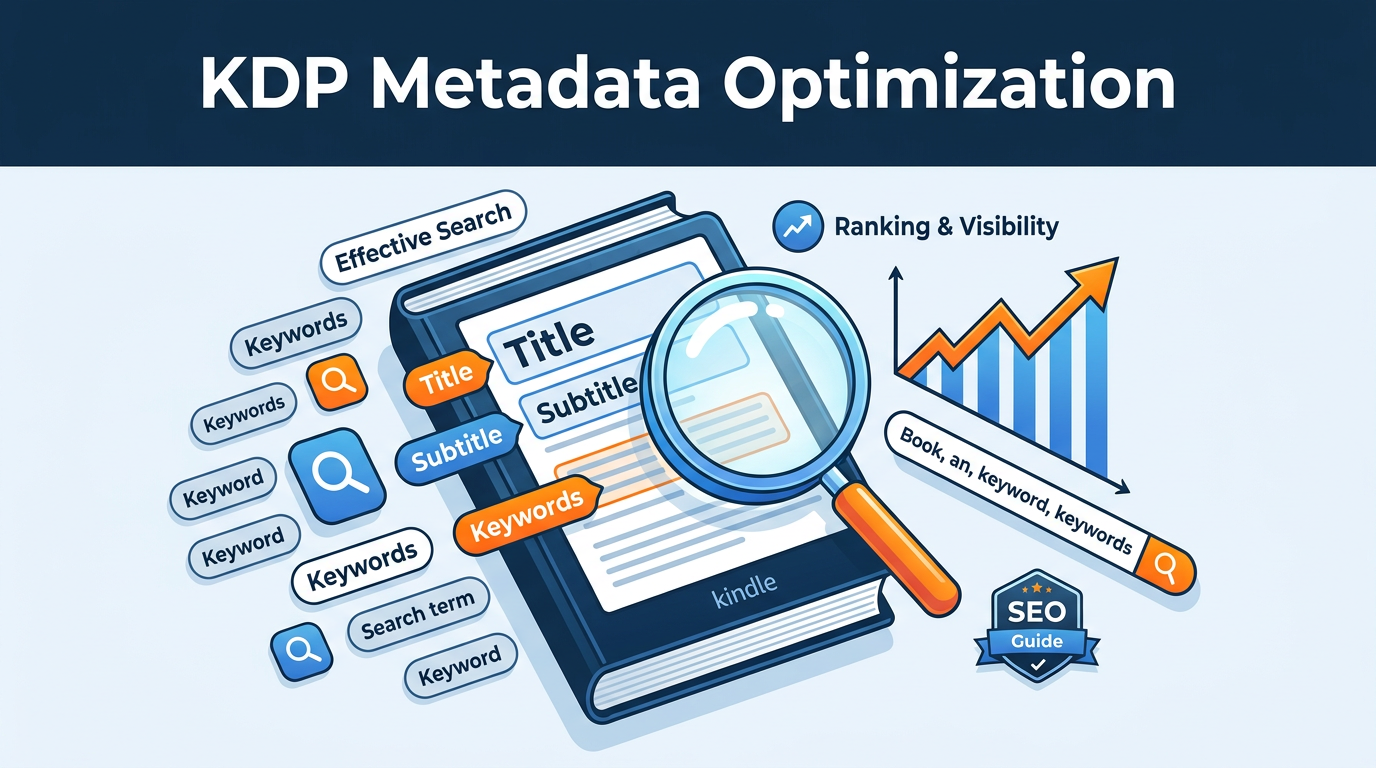
Your title and subtitle are the most weighted elements in the Amazon algorithm. This is the prime real estate for your most important keywords. However, you must strike a delicate balance between "writing for the bot" and "writing for the human."
The Title: Keep this punchy and memorable. While it should ideally contain your primary keyword, it should not look like a list of tags. For non-fiction, the title should clearly state the benefit of the book.
The Subtitle: This is where you can be more liberal with keyword placement. A good subtitle provides context and includes secondary keywords. For a book on keto dieting, a title might be The Keto Blueprint, while the subtitle could be A 30-Day Low Carb Meal Plan for Rapid Weight Loss and Increased Energy.
"The best titles create an emotional reaction or promise a specific transformation, while the subtitle handles the heavy lifting of SEO." - Industry Insight
Mastering the 7 Backend Keyword Boxes
Amazon KDP allows you to enter seven keywords (or phrases) in the backend metadata. These are invisible to the reader but essential for the algorithm. A common mistake is repeating words that are already in your title or subtitle. Amazon's algorithm is smart; it "indexes" every word in your metadata. If your title includes "Dog Training," you do not need to repeat "Dog" or "Training" in your backend keywords.
Instead, use this space for:
- Synonyms: (e.g., "canine coaching" instead of "dog training").
- Specific Niches: (e.g., "potty training for puppies").
- Target Audience: (e.g., "first-time dog owners").
- Themes or Tropes: For fiction, include things like "slow burn," "billionaire trope," or "dystopian thriller."
Avoid using brand names or other author names, as this violates Amazon's Terms of Service and can lead to account suspension. Focus on the core attributes of your story or information.
Category Selection: The Path to the Bestseller Badge
The "Amazon Bestseller" orange badge is one of the most powerful conversion tools available. To get it, you need to rank #1 in at least one category. While you can only select two categories during the initial setup, the strategy here is to find "niche" categories that have low competition but are still relevant.
In the past, authors could email KDP support to add their book to up to ten categories. While Amazon has streamlined the category selection process, you can still optimize your "Browse Nodes" by choosing specific sub-categories. If you place your book in a broad category like "Fiction," you will be competing with millions of books. If you place it in "Fiction > Science Fiction > Time Travel," your chances of ranking are significantly higher.
Before you finalize your book's physical aspects, ensure you understand the printing requirements, as these can affect your category eligibility. Using a Cover Calculator ensures your spine width and dimensions meet industry standards, preventing technical delays that could hurt your launch momentum.
Writing a High-Converting Book Description
Once your SEO brings a reader to your page, your description must convert them. Most authors treat the description like a dry book report. Instead, think of it as a sales page. A high-converting description uses the "AIDA" formula: Attention, Interest, Desire, and Action.
- The Hook (Attention): The first sentence must be bold, intriguing, or address a pain point.
- The Setup (Interest): Introduce the conflict or the core problem your book solves.
- The Benefits (Desire): For non-fiction, use bullet points. For fiction, highlight the emotional stakes.
- Call to Action (Action): Explicitly tell the reader to buy the book or download it via Kindle Unlimited.
Crucially, Amazon allows you to use basic HTML to format your description. A block of plain text is hard to read and looks unprofessional. Using an HTML Description Formatter allows you to add bold headings, bullet points, and italics, which makes your description stand out and look like it was produced by a top-tier publishing house.
The Impact of Pricing and Royalties on SEO
While pricing might seem unrelated to SEO, it directly impacts your conversion rate. If you price a 20-page short story at $9.99, your conversion rate will be near zero, signaling to the algorithm that your book is not a good match for the keyword, and your ranking will drop.
Conversely, a price that is too low can sometimes devalue the book in the eyes of the consumer. You must find the "sweet spot" for your genre. Most indie fiction performs best between $2.99 and $4.99, while non-fiction can often command $6.99 to $9.99 depending on the depth of the information.
To plan your business model effectively, use a Royalty Calculator. By understanding exactly how much you earn per sale at different price points, you can better calculate your "Acquisition Cost"—how much you can afford to spend on ads to gain one organic sale and boost your SEO ranking.
Common SEO Mistakes to Avoid
Even experienced authors fall into traps that can suppress their rankings. Avoid these common pitfalls:
- Keyword Stuffing: Filling your title with a string of unrelated keywords. This looks like spam and can lead to Amazon removing your book.
- Neglecting A+ Content: Amazon now allows all authors to add "A+ Content"—rich images and text below the description. This is a massive opportunity to build trust and improve conversion.
- Ignoring the "Look Inside" Feature: The first few pages of your book are essentially part of your marketing. If your formatting is poor or your opening chapter is weak, readers will bounce, hurting your conversion rate.
- Static Metadata: KDP SEO is not "set it and forget it." If your rankings are slipping, experiment with new keywords or a updated description.
Expert Insights: The "Social Proof" Loophole
One of the biggest industry secrets in KDP SEO is the relationship between external traffic and organic ranking. Amazon loves it when you bring "new" customers to their platform. If you drive traffic from an email list, social media, or a blog to your Amazon page, the A10 algorithm recognizes this as a high-value signal.
When you drive external traffic, your sales velocity increases. This causes your organic ranking for your target keywords to rise. This creates a "flywheel effect" where your paid or external efforts lead to a permanent increase in organic, "free" sales from Amazon's search results.
The Role of Reviews
Reviews do not directly affect your rank in the way keywords do, but they are the ultimate conversion factor. A book with 100 reviews and a 4.5-star rating will always out-convert a book with zero reviews. More conversions mean higher rankings. Always aim to get your first 10-20 reviews as quickly as possible through "Advance Review Copies" (ARCs) or by reaching out to your most loyal readers.
Using Amazon Advertising (AMS) to Supplement SEO
Amazon Marketing Services (AMS) is the paid side of Amazon SEO. It allows you to pay to appear at the top of search results for specific keywords. While it costs money, the benefit is twofold: you get immediate sales, and those sales contribute to your book's organic sales velocity.
For a new book, running "Auto Campaigns" can help you discover which keywords Amazon's AI thinks are relevant to your book. Once you identify high-performing keywords, you can move them into "Manual Campaigns" and bid more aggressively. This synergy between paid ads and organic SEO is the fastest way to scale a publishing business.
Conclusion: Your Action Plan for Success
Ranking on the first page of Amazon is not an accident; it is the result of a calculated, data-driven strategy. To dominate KDP SEO, you must continuously optimize every facet of your book’s presence. Start by doing deep keyword research and using a Keyword Combiner to find those hidden niches. Ensure your title and subtitle are optimized for both bots and humans, and never underestimate the power of a professional appearance—use an HTML Description Formatter to make your sales copy pop.
Monitor your progress closely. Use a Royalty Calculator to ensure your profit margins allow for reinvestment into advertising. If a keyword isn't working, change it. If your cover isn't converting, redesign it using the specifications from a Cover Calculator. The authors who win are those who are willing to treat their books as living products that require constant refinement.
By following these guidelines, you are not just publishing a book; you are building a discoverable brand. Success on Amazon is a marathon, not a sprint, but with the right SEO foundations, you can ensure your book finds the audience it deserves.
Be the first to leave a comment!